.png)
The Mother Wound & The Inner Child’s Relationship With Eating

Updated: Sep 15
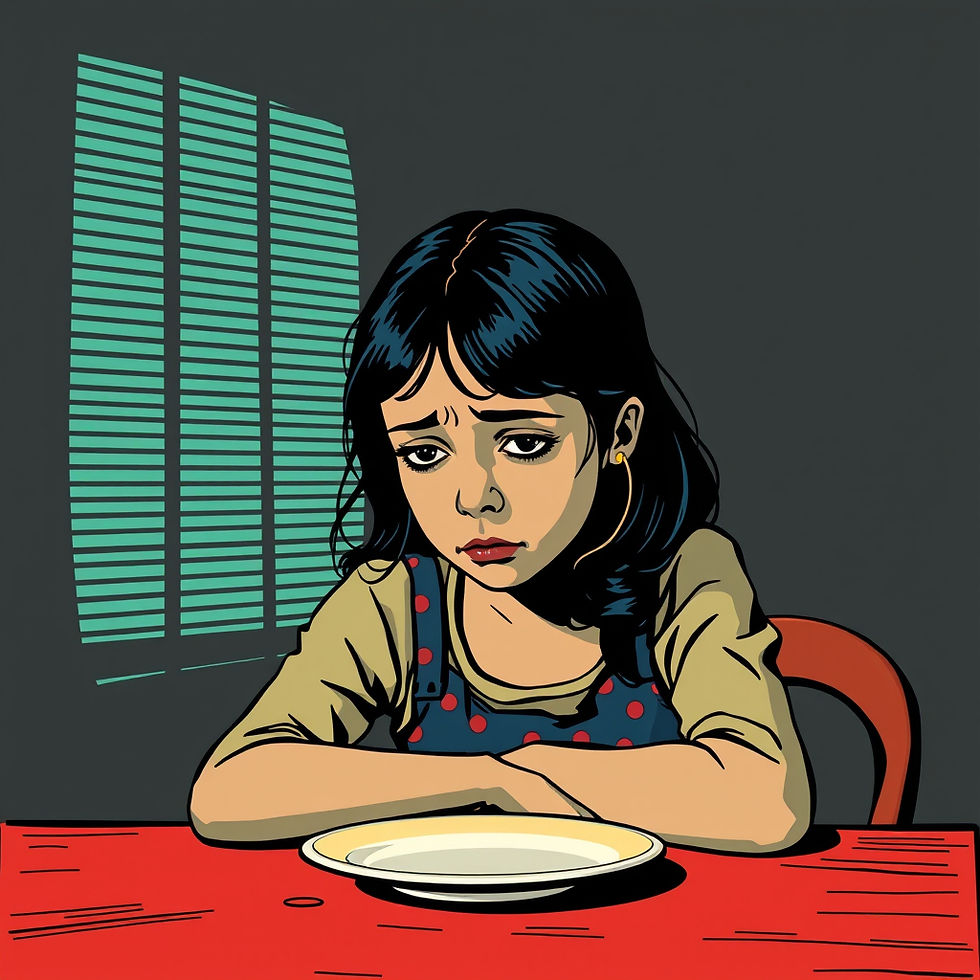
There are wounds that speak loudly and then there are the ones that live quietly in the body, shaping our hunger, our cravings, our shame, and the way we feed ourselves without us ever realising why.
👜The Mother Wound is one of them.
And food is often where its echo lands first. Because food was never your first relationship with nutrition.
It was your first relationship with regulation. It was connection. It was the body’s first language of safety.
If you binge: it may be attachment eating (not lack of discipline)
If you restrict /forget to eat: it may be functional freeze
If you swing between both: that’s nervous system protection
Mother Wound, Inner Child Eating, and the Nervous System
The mother wound can shape inner child eating patterns because food is often the first place the nervous system learns safety, attunement, receiving, or emotional absence.
Before we had words, we had feeding.
Before we understood love, we understood the feeling of being held, soothed, responded to, or not.
Food was our earliest language of connection: the first place the nervous system learned what safety felt like, or what it didn’t.
For many of us, the relationship with food didn’t begin with appetite.
It began with attunement.
Was someone present?
Were they rushed?
Were they overwhelmed?
Did they meet our cries or did they shrink from them?
These early moments write a blueprint the inner child carries for life.
So when, years later, we find ourselves reaching for food to comfort, quiet, numb, fill, or stabilise us, it isn’t a lack of willpower.
It is the body returning to the earliest form of regulation it ever knew.
And for others, when hunger disappears altogether, when eating feels like a task, a threat, a loss of control, or something undeserved, this too has roots in the same wound.
The Mother Wound can create both overeating and under-eating, bingeing and restriction, fullness as safety and emptiness as safety.
Two opposite behaviours born from the same unmet need.
Because long before food became something we ate,
it became something we felt.
It became:
✨food = presence
✨food = reassurance
✨food = regulation
✨food = “I exist, I matter, I will be met.”
This is why diets don’t work.
Why shame doesn’t work.
Why rules don’t work.
Because the struggle was never behavioural, it was relational.
Food became the substitute for safety when safety was inconsistent.
Food became the proxy for a mother’s attunement when attunement was unpredictable, engulfing, distant, or emotionally unavailable.
Food absorbed the ache that had nowhere else to go.
This is the invisible story beneath so many battles with eating;
what I call emotional eating trauma: the body reaching for food as emotional safety when relational safety was inconsistent.
When clients ask “why I binge eat or starve trauma,” the answer is almost always the same:
the body learned to regulate through food when attunement was unpredictable.
And it’s why healing the relationship with food begins not with discipline, but with understanding. With meeting the inner child who still holds the memory of being unfed emotionally, even if she was fed physically.
In this piece, we’re going to explore:
how the Mother Wound shapes appetite, cravings, and self-worth
why both bingeing and restriction can come from the same unmet need
how functional freeze disguises itself as “not being hungry”
the emotional meaning-making we inherit around food, body, and belonging
and why Emotional Recalibration brings real, lasting change
Because when the inner child feels fed, not with food, but with safety and attunement, the body no longer asks food to do the job of love.
🎥 Food: The Comfort No One Judged
For many children, emotional needs weren't welcomed, but eating was.
So the nervous system learns:
this is safe… this is allowed.
What looks like “emotional eating” later in life
often began as the only comfort that didn’t cost connection.
Food: The Comfort No One Judged
Food was the only comfort no one judged. Crying was too much. Anger wasn't allowed. Needing reassurance felt inconvenient. But food, food was acceptable. So it becomes the only safe way to self soothe. And slowly, quietly, food becomes the place you go when you really just want to be held.
If you prefer to watch than read, the 22 minute video is lower down, just before FAQs.
Food as Substitution for Safety: Attachment Eating, Not Comfort Eating
We’re taught to call it comfort eating, as though it’s a simple craving or a lack of discipline, a momentary lapse in willpower. But that language misses the truth entirely.
Most emotional eating isn’t about comfort.
It’s about attachment. This is why the mother wound and appetite are inseparable. How we were fed: emotionally, not just physically, becomes the blueprint for how we relate to hunger, fullness, and food.
For many, bingeing becomes attachment wound binge eating; a desperate attempt to recreate the warmth, presence, or soothing the child hoped for but never consistently received.
If the inner child learned her needs were unwelcome, she may develop inner child eating patterns that echo those early dynamics her entire adult life.
Food becomes a stand-in for the regulation the nervous system never consistently received.
Before we could speak, before we formed memories, before we understood anything about the world, our bodies learned one thing:
“When I cry, will someone come?”
If they came:the body learned co-regulation, safety through connection.
If they didn’t, or only sometimes, the body learned something else:
I must find a way to soothe myself.
And so food, long before it became nutrition, became regulation.
It became the warm, dependable sensation in the belly when the emotional world felt unpredictable.
It became the one thing that arrived quickly, reliably, without conflict.
It became a quiet way of saying:“I exist. I am soothed. I am not alone in this moment.”
Food = presence
Food = grounding
Food = distraction from overwhelm
Food = the closest thing the body remembers to being held
This isn’t a behaviour.
It’s a survival adaptation.
And here is the part most people never understand:
The body reaches for food not because it is hungry
but because it is lonely, dysregulated, or unmothered in that moment.
The hand that reaches for food is often the child who never learned another way to settle her system.
The adult reaches for the biscuits at 10pm, but it’s the child underneath asking:
"Who is here for me?”
“What do I do with this ache?”
“What do I do with this emptiness?”
Food becomes the way the nervous system says: “I’m overwhelmed. I need help. I don’t know how to feel safe on my own.”
This is attachment eating, not comfort eating.
And it is not a flaw, it is evidence of your body’s genius.
In the absence of attunement, it found a substitute.
It kept you alive.
It kept you functioning.
But substitutes never feel the same as the thing they’re replacing.
This is why food can soothe for a moment but never settle the deeper ache.
Because it was never meant to do the job of love.
This is the doorway to understanding everything that follows:
overeating, restriction, bingeing, emotional cravings, the absence of hunger, the loss of appetite in trauma, the constant search for “willpower” that never quite holds.
None of these are food problems.
They are nervous system adaptations to early relational wounds.
And when we start here, with truth rather than shame,
healing becomes possible. If you’re looking for support specifically around early attachment wounds and relational trauma, you can learn more about my Attachment Wound Therapy here.
The Mother Wound & Food Patterns
If food is the body’s earliest form of regulation,
then the Mother Wound is the earliest disruption of it.
Before language, before memory, before identity,
feeding was our first emotional dialogue with the world.
A mother’s presence, her timing, her tone, her availability during feeding shaped our nervous system long before we understood what was happening.
And so many of us were raised on inconsistent nourishment, not of milk, but of attunement.
This is the part no one talks about:
The Mother Wound shows up in our relationship with food more than anywhere else.
Feeding as the First Form of Attunement
A newborn doesn’t just drink.
He or she receives.
He or she receives:
eye contact
tone
warmth
responsiveness
rhythm
permission to need
permission to take up space
Feeding is the first moment the child learns:
When I express a need, is someone attuned to me?
Do I matter enough to be met?
Is my hunger acceptable or inconvenient?
Will someone stay present while I receive?
If feeding was warm and consistent, the child’s body learned safety.
If feeding was rushed, distracted, unpredictable, anxious, shaming, or emotionally absent, the child’s body learned something else:
“My needs are too much.”
“My hunger is a problem.”
“Receiving makes people withdraw.”
“Being fed is not the same as being seen.”
This becomes the template for everything that follows.
When Feeding Becomes Control
For many women, the mother wound includes:
being told to finish everything on the plate
being shamed for wanting more
being monitored, restricted, or criticised
being praised for being “good,” “easy,” or “not fussy”
sensing their mother’s anxiety around food, weight, body image
being rewarded with food instead of presence
being punished through food
learning that appetite = inconvenience
learning that desire = danger
And so the body learns to suppress, shrink, quieten, or hide its needs.
Food becomes an emotional currency, not nourishment.
A performance, not a relationship.
A place where the child protects the mother’s comfort at the expense of her own hunger.
**And this is the quiet truth:
The Mother Wound manifests in both overeating and under-eating.**
Two opposite behaviours.
One identical wound.
Bingeing sounds like this:
“I need something to fill what was never given.”
“I don’t know how to soothe myself without this.”
“Food is the only place I feel momentarily held.”
Restriction sounds like this:
“I don’t deserve to take up space.”
“If I’m small enough, perfect enough, controlled enough, maybe I’ll be loved.”
“Hunger is safer than needing.”
Functional freeze looks like this:
Absence of hunger = absence of self.
When the body is overwhelmed, appetite shuts down, not from strength, but collapse.
This is not a battle with food.
It is a nervous system trying to protect you in the only way it knows.
The Mother Wound is not about blame; it’s about inheritance.
Your mother’s relationship with feeding, food, hunger, her own body, and her own mothering was shaped by the era, culture, pressures, trauma, and conditioning she carried.
If she lived with:
emotional overwhelm
lack of support
body shame
fear of judgment
perfectionism
chronic stress
rigid food beliefs
internalised misogyny
fear of her own appetite or needs
Then she did not have the capacity to teach you something she never received.
And so food became the emotional landscape the two of you navigated
together, unconsciously, generation after generation. For many, this sits alongside the Father Wound, which shapes protection, trust, and the ability to receive support.
Read it here - 💼 What Is the Father Wound?
This is not your fault.
But it is your inheritance.
And once you see it, you can choose differently.
Functional Freeze & Control
Not everyone turns to food when they’re overwhelmed.
Some turn away from it completely.
And this is one of the most misunderstood patterns in the entire emotional landscape:
When appetite disappears, it is not discipline, it is dorsal vagal shutdown.
It is collapse.
It is the body going dim to survive its own overwhelm.
It is the internal child curling inward because there is no safe place to land.
“I’m just not hungry.”
“I’m being good.”
“I like feeling empty.”
“I prefer control.”
Functional freeze is:
“My system is overwhelmed.”
“Feeling anything is too much.”
“Hunger threatens the structure holding me together.”
“I don’t know how to receive, even from myself.”
In freeze, the body suppresses appetite the same way it suppresses emotion:
quietly, instinctively, without conscious permission.
This is why people in freeze often say:
“I forget to eat.”
“I don’t notice hunger until I’m shaky.”
“Food feels like an interruption.”
“Eating makes me anxious.”
“I prefer coffee, it keeps me moving.”
“Hunger feels dangerous or too intimate.”
In functional freeze, the body suppresses appetite to protect itself.
This is why many people quietly search for explanations like “why I don’t feel hunger” without realising their nervous system is in shutdown.
Functional freeze appetite collapse is not a choice, it is the body going dim to survive emotional overload.
Eating requires presence.
Presence requires safety.
And safety is the very thing the system doesn’t have.
Control as Safety, Not Vanity
Diet culture taught us to see control around food as ambition, discipline, or preference.
But trauma teaches something entirely different:
Control is a form of self-protection when the world feels too unpredictable to surrender to nourishment.
“If I can control food, maybe I can control my life.”
“If I can stay small, maybe I’ll be safe.”
“If I restrict, I don’t have to feel.”
“If I can manage my body, I don’t have to face my emotions.”
“If I disappear, no one can overwhelm me again.”
This isn’t about food at all.
It’s about survival.
When the mother wound includes:
emotional volatility
inconsistency
engulfment
unpredictability
criticism
anxiety projected onto the child
a lack of stable presence
…the child grows up learning:
“My needs cause chaos.”
“My appetite is too much.”
“Receiving makes people withdraw, collapse, or turn cold.”
So the adult learns to control the one thing they believe they can:
their own intake.
It is a desperate attempt to create the safety the body never learned.
Freeze Is Not Your Fault, It’s Your Body’s Attempt to Save You
In functional freeze:
digestion slows
interoception dulls
hunger cues vanish
emotional bandwidth collapses
the body retreats inward
This is why trauma survivors often say:
“I don’t know what I feel.”
“I don’t realise I’m hungry until I’m starving.”
“I don’t feel connected to my body.”
“It’s easier not to eat.”
This is not apathy.
It is not laziness.
It is not disinterest.
It is a nervous system overwhelmed by a lifetime of unmet needs.
And healing this requires tenderness, not discipline.
Presence, not pressure.
Safety, not shame.
Because when the body feels safe enough to thaw,
hunger returns.
Food Is Identity, Not Behaviour
By the time we are adults, food seems like a set of choices;
what we eat, when we eat, how much we allow, how much we deny.
But for the inner child, food was never a choice.
It was identity.
It was belonging.
It was approval.
It was safety.
It was survival.
Long before food became a behaviour,
it became a story we learned to tell ourselves.
A story about who we were allowed to be.
A story about what our needs meant.
A story about how much space we were allowed to take up in the world.
These meanings become the roots of somatic hunger, hunger shaped by the nervous system, not the stomach.
The Inner Child Learns From Meaning, Not Nutrition
No child thinks:
“Protein is good.”
“Sugar is bad.”
“Portion size matters.”
Children think:
“Was I praised? Was I shamed? Was I seen?”
And the body absorbs these moments like scripture.
Here are some of the most common imprints and every one is a Mother Wound echo:
“I was praised when I ate everything.”
→ Love = compliance
→ Being “easy” keeps me safe
→ I must not disappoint
“I was shamed for wanting more.”
→ Hunger is unacceptable
→ My needs inconvenience people
→ Desire makes me unlovable
“My mother dieted, so I learned to shrink too.”
→ Thinness = survival
→ Mirroring = approval
→ Taking up less space = virtue
“Food was the only time she was soft with me.”
→ Eating = connection
→ Fullness = presence
→ Food = the closest thing to being held
“Food was chaotic in our house.”
→ unpredictability becomes the baseline
→ binge–restrict cycles mirror emotional inconsistency
“I was the peacekeeper, so my own needs didn't matter.”
→ eating becomes private, dissociated, hidden
→ appetite becomes a threat to harmony
“Enjoying food was labelled greedy.”
→ pleasure feels dangerous
→ receiving feels shameful
→ fullness becomes guilt
“She criticised my body, so I learned to police myself.”
→ control = acceptance
→ self-surveillance becomes identity
→ disappearance becomes safety
This Is Why Food Behaviours Feel So Hard to Change
Because you are not fighting a habit.
You are reconciling with an identity that was formed decades ago.
You are not resisting a craving.
You are resisting a childhood rule that once kept you alive.
You are not battling willpower.
You are battling meaning:
“If I eat this, what does it say about me?”
“If I want more, am I too much?”
“If I don’t want anything, am I disappearing again?”
“If I let myself feel hunger, will I feel everything else too?”
Eating is rarely about hunger.
It is about identity.
And identity is shaped not by food, but by relationship,
especially the mother-child bond.
This is why every attempt at change that focuses on behaviour alone collapses under its own pressure.
Because the behaviour isn’t the root, it’s the echo.
**And here is the liberating truth:
Anything learned can be unlearned.**
Especially when what you learned was never about food in the first place.
Inner Child Healing Is the Solution
If food has become a substitute for safety,
if hunger feels threatening,
if fullness feels shameful,
if eating feels like chaos or control,
then nothing changes by changing the food.
Because food was never the problem.
Food was the messenger.
Food was the bridge your body built when no one could meet your needs in the way you deserved.
Long before your mind made choices,
your nervous system made adaptations.
And this is why inner child healing becomes the turning point.
It doesn’t shame the behaviour.
It doesn’t demand discipline.
It doesn’t wage war on appetite, desire, or the body.
Instead, it asks a different question:
“What part of you is still waiting to be fed?”
When we heal the relational wounds beneath our eating patterns, the body no longer needs to use food as emotional safety. Hunger becomes sensation, not panic; fullness becomes comfort, not guilt.
For those wanting trauma-informed, body-based support, I also offer Trauma Therapy focused on nervous system regulation and inner child repair.
Safety Before Behaviour
We cannot change how we eat until we change how we feel.
The body will always reach for the familiar form of regulation —
not because it’s the best option,
but because it’s the oldest one.
Inner child therapy goes to the source:
it restores a sense of internal safety
it teaches the nervous system to downshift from survival
it reconnects you with hunger without fear
it helps your body receive without collapse
it unravels the shame wrapped around appetite
it repairs the early imprint that taught you your needs were too much
When the body learns safety,
behaviour no longer has to be managed.
It changes naturally, because the system beneath it has changed.
Body Before Thought
Traditional approaches target mindset, willpower, or beliefs.
But eating patterns do not begin in the mind.
They begin in the body’s memory:
the memory of absence
the memory of inconsistency
the memory of unpredictability
the memory of being too much or not enough
the memory of trying to earn connection through shrinking or pleasing
Inner child healing works through somatic attunement, not cognitive effort.
It creates space for you to feel hunger without panic, fullness without guilt, pleasure without shame, and nourishment without collapse.
This is how the inner child learns something new:
“I am safe now.”
Worth Before Willpower
You do not regulate your eating through force.
You regulate it through self-worth.
When a child learns she is allowed to need,
allowed to take up space,
allowed to receive,
allowed to exist without earning love,
her relationship with hunger changes.
Restricting no longer feels like virtue.
Overeating no longer feels like comfort.
Control no longer feels like survival.
Worth transforms behaviour far more radically than willpower ever could.
Integration Before Intervention
This is why diets, plans, and “rules” collapse:
they demand change before the body feels ready for it.
Inner child healing moves differently:
slowly, gently, consistently,
enough to melt the freeze,
soften the rigidity,
and give the inner child permission to be held in a way she never was.
As your system integrates safety,
your relationship with food reorganises itself around truth, not trauma.
And here is the part people feel in their bones:
When the inner child feels fed,
the body stops asking food to do the job of love.
Client Stories: What Happens When the Nervous System Feels Safe
1. The Woman Who Reclaimed Her Body After Cancer
One woman came to me after her second recovery from cancer, exhausted, frightened, and painfully aware that her relationship with processed food wasn’t supporting her healing.
But she didn’t need more rules or restrictions; she needed safety.
As her nervous system softened and her inner child felt held, something remarkable happened:her body began reaching for nourishment instead of numbness.
She didn’t “discipline herself.”
She didn’t follow a plan.
She simply became attuned to what her body was asking for when it no longer felt in danger.
What changed wasn’t her willpower,
it was her sense of worth,
her capacity to receive,
her ability to feel hunger without panic
and fullness without guilt.
The weight she carried emotionally and physically began to fall away in a way that felt natural, not forced.
This is what happens when the body feels safe enough to choose life.
2. The Client Who Released Weight Without Ever Trying
Another woman didn’t come to me for food struggles at all.
She came to heal her inner child the part of her that had lived decades trying to be “good,”
“easy,”
“unproblematic,”
and small enough to be acceptable.
As she reclaimed her voice, her boundaries, and her sense of belonging, her eating patterns changed on their own.
She found herself eating when she was hungry and stopping when she was full, something she had never experienced without shame or anxiety.
Her body began letting go of weight quietly, steadily, as if it had been waiting for permission to stop carrying what no longer belonged to her.
This wasn’t restriction.
This wasn’t a programme.
This was the inner child no longer needing food to feel safe.
“This feels effortless,” she told me.
And that’s exactly how healing works when the wound is finally met.
3. The Woman in Her Sixties Who Became Radiant Again
A client in her early sixties once bumped into me months after our work together ended, glowing, grounded, and more radiant than I had ever seen her.
She said she had fallen in love with eating fresh, colourful meals because she had fallen in love with herself.
Not a diet.
Not a plan.
Not hypnosis “for weight loss.”
Just the natural outcome of a nervous system no longer living in survival mode.
Her relationship with food transformed because her relationship with worth transformed.
Her body stopped asking food to soothe the ache she had finally learned to meet with presence.
She didn’t become disciplined.
She became safe.
Closing Reflection
Healing your relationship with food is not about controlling hunger, silencing appetite, or disciplining yourself into a smaller life.
It’s about turning toward the child who learned to survive without consistent safety, and offering her what she never had: presence, patience, attunement, and the freedom to exist without apology.
When you begin to feed yourself with truth instead of shame,
with safety instead of fear,
with self-belonging instead of self-abandonment,
the patterns around food don’t have to be fought,
they simply lose their urgency.
This is the quiet miracle of inner child healing:
you stop trying to fix yourself,
and you start meeting yourself.
If this exploration stirred something in you,
a recognition of your own patterns,
a soft ache you’ve carried for years,
a sense that your relationship with food has always been about something deeper,
you’re not alone, and you don’t have to navigate this on your own.
Together, we’ll look gently at the roots of your patterns and begin restoring the safety your body has been waiting for.
Your hunger is not a flaw.
Your needs are not too much.
And the child within you is ready to be fed with something far more nourishing than food:
your own unconditional presence.
Further Reading
If something in this stirred recognition, these pieces will guide you deeper into the roots of the mother wound, attachment patterns, and the nervous-system adaptations that shape our eating behaviours.
👜 What Is the Mother Wound (and How Do You Heal It)?
The foundation of how early attunement shapes identity, safety, appetite, and belonging.
💼 What Is the Father Wound (and How Do You Heal It?)
How emotional protection — or the lack of it — shapes lifelong patterns of need, boundaries, and self-worth.
🧊 What Is Functional Freeze?
Understanding why hunger disappears, why appetite collapses under stress, and how the body shuts down to cope.
🧸 What Is Childhood Trauma?
How early emotional experiences map themselves onto the body, the nervous system, and our adult behaviours.
🧠 What Is Toxic Empathy?
When care becomes self-erasure — and how early relational roles teach us to prioritise others’ emotions over our own needs.
🎭 What Is Gaslighting?
Why those with early attachment wounds may struggle to trust their perceptions — and how to rebuild inner certainty.
🔁 Why Do We Repeat Patterns?
A powerful look at why the nervous system chooses the familiar over the safe, even when it hurts.
🕳 What Is the Shadow Self (and Why Does It Matter?)
How suppressed needs, appetite, emotion, and anger form a hidden identity that quietly drives behaviour.
🧠 What Is Meant by Fight, Flight, Freeze and Fawn?
A trauma-informed map of the body’s survival responses — including why eating, not-eating, or over-eating can be stress responses.
🎥 Emotional Eating & the Mother Wound
FAQ — The Mother Wound & The Inner Child’s Relationship With Food
1. How does the Mother Wound affect my relationship with food?
The Mother Wound shapes the body’s earliest understanding of safety, attunement, and receiving. When emotional needs were met inconsistently through unpredictability, criticism, engulfment, or absence, food often became the substitute for regulation. This can lead to overeating, under-eating, binge–restrict cycles, or emotional eating. These patterns are not about willpower; they’re attachment responses rooted in early relational experience.
2. Why do I eat when I’m not hungry or forget to eat altogether?
Eating without hunger is usually the nervous system seeking comfort, grounding, or distraction from emotional overwhelm. Forgetting to eat is often a sign of functional freeze, a trauma response where appetite shuts down to reduce internal sensation. Both patterns are survival adaptations, not personal failures, and both trace back to early experiences of inconsistent safety.
3. What is functional freeze, and how is it connected to appetite?
Functional freeze is a dorsal vagal response where the body goes into shutdown rather than fight, flight, or fawn. In this state, interoception (the ability to feel internal cues) becomes muted, and hunger signals may disappear. This isn’t discipline, it’s collapse. Many people with Mother Wound histories experience loss of appetite during stress, emotional numbness, or overwhelm because the body is protecting itself.
4. Can healing the Mother Wound change emotional eating or restriction?
Yes but not through diets or discipline. When the underlying emotional wound is met with safety, attunement, and inner-child repair, the body no longer needs food to regulate itself or the absence of food to maintain control. Healing the Mother Wound reorganises the nervous system, softens shame around appetite, restores trust in hunger cues, and transforms eating patterns from the inside out.
5. How does Inner Child Healing help with food-related patterns?
Inner child healing works at the root, not the symptom. It restores nervous-system safety, helps you reconnect with hunger and fullness cues, and dissolves the shame or fear attached to receiving, needing, or taking up space. Rather than forcing behaviour change, it heals the patterns that made food feel like safety in the first place. When the inner child feels consistently held, the body no longer needs food to do the job of love.
If something in this stirred a quiet recognition, a pattern you’ve lived with for years, a tenderness you’ve never named, a longing to feel safe in your own body again, you don’t have to navigate this alone.
Together, we can explore what your nervous system is still holding, and what healing might look like when the inner child is finally met with truth, gentleness, and attunement.
Your relationship with food is not a flaw. It’s a story. And stories can be rewritten. If you're not quite ready to book, 💌 Receive Weekly Stories With Stella
Soulful reflections on trauma-informed healing, inner-child integration, and emotional growth delivered each Saturday. 👉 Join me here 🎧 Listen Here: A Moment of Calm for the Aching Heart – Free Guided Audio
Soothe your nervous system.
You are not too much. You are not broken. You are becoming.
Emotional Eating & the Mother Wound
Emotional eating isn't about food at all. It's about safety. Food just happens to be the quickest way the body knows how to soften. Long before food was nutrition, it was regulation. So, when you reach for something to eat, when you're overwhelmed, it isn't weakness. It's your nervous system remembering the first place it ever felt held. For some children, food was the only thing they could control. Not emotions, not the house, not the adults, just this. What you ate, when you ate, how much. So control around food isn't vanity. It's protection. It's a child inside you whispering, "At least this part is mine. What's wrong with me? Why can't I control my appetite? I hear this all the time. But appetite isn't a character flaw. It's a nervous system signal. Sometimes the body isn't asking for food at all. It's asking for comfort, grounding, company. And food is simply the fastest answer available. Nothing is wrong with you. Your body is trying to soothe itself. The only way it learned how. Food was the only comfort. No one judged. Crying was too much. Anger wasn't allowed. Needing reassurance felt inconvenient. But food, food was acceptable. So it becomes the only safe way to self soothe. And slowly, quietly, food becomes the place you go when you really just want to be held. Sometimes you're not hungry, you're lonely. There's a difference. Hunger is in the stomach. Loneliness is in the chest. But they can feel strangely similar, empty. So the body reaches for food. When what it really wants is warmth, presence, someone beside you. It's not lack of discipline. It's the nervous system saying, "Please don't leave me alone with this feeling." Why does eating feel tense? Like there's pressure, rules, watchfulness, like someone is slightly judging every bite. For many of us, food was never neutral. It carried tone, mood, approval, disappointment. So, the body learned eating isn't just eating. It's performance. And decades later, that old tension still lives in your chest. Not because you're dramatic, but because your nervous system remembers. Emotional eating doesn't become chronic overnight. It starts small. One moment where food softened something lonely, overwhelmed, un-held, and your body noticed. This helps, so it remembers. Not as a thought, as a reflex. So the next time life feels too much, your hand moves before your mind does. Not because you're weak, because the nervous system always returns to the first place it ever felt safe. Over time, it looks like lack of control, but really it's an old survival strategy, still trying to protect you. Sometimes food is how we learned to be good. Finish your plate. Don't fuss. Don't want too much. Be easy. So, appetite becomes performance. Small, polite, convenient. You weren't managing food. You were managing belonging. trying to stay loved, trying not to be too much. And those patterns don't vanish when you grow up. They just follow you to the table. Healing is learning. You don't have to earn your place here. You already belong. Before food was nutrition, it was regulation. Before calories, there was comfort. Before choice, there was attunement. Your nervous system didn't first learn food as fuel. It learned warmth, presence, being held, safety, survival. So if eating feels emotional now, it isn't irrational. It isn't weakness. It's ancient. Your body remembering the very first way it ever felt safe. Most emotional eating isn't about comfort. It's about attachment. The body isn't asking, "Am I hungry?" It's asking, "Am I alone? Am I safe? Is anyone here?" Food just happens to be the fastest thing that says, "I'm here." Not everyone reaches for food. Some people forget to eat entirely. Coffee, momentum, numbness. But that isn't discipline. It's functional freeze. When the system is overwhelmed, appetite shuts down because feeling hunger means feeling something. And sometimes that's already too much. As a baby, feeding wasn't just milk. It was eye contact, tone, touch, timing. It was the first place your body learned, "When I need, will someone come?" Your relationship with food started there. Not in adulthood, not with willpower, but right there. Sometimes binging isn't excess. It's longing. The body trying to recreate something it barely remembers. Warmth, soothing, someone steady nearby. It's not lack of control. It's a child trying to feel held. Restriction. sometimes gets praised, disciplined, good, strong, but often it's fear. If I need less, I'm safer. If I'm small, I won't be too much. If I don't feel hunger, I don't have to feel something. That's not strength. That's protection. The mother wound isn't only emotional. It's somatic. It shows up in appetite, fullness, shame, permission to receive because your first experience of being met happened through feeding. So food becomes the echo of that story. Diets assume behaviour, but trauma lives in the nervous system. You can't discipline your way out of a survival response. If food became safety, taking it away feels like danger. So, the body rebels, not because you failed because it's trying to protect you. Night eating is rarely about hunger. It's often loneliness. When the world goes quiet, the inner child gets louder. Food becomes company, grounding, something warm in the dark, not a floor, but a substitute for connection. Some people didn't learn food as comfort. They learned tension. The dinner table wasn't warm. It was quiet or loud or unpredictable. arguments, silence, walking on eggshells, eating fast or not at all. Because your body wasn't asking, "Am I hungry?" It was asking, "Is it safe right now?" Food can't feel soothing when the table felt like a battlefield. Some children didn't get fed because they were feeding everyone else, cooking, serving, cleaning, making sure everyone was okay, becoming useful before you were allowed to just be little. So food wasn't nourishment. It was responsibility, caretaking, pressure, and later in life, it still shapes the way you eat because no one ever taught you that you mattered at the table, too. If you grew up feeling too sensitive, too needy, too emotional, you might learn to suppress your appetite, too. Because hunger is need and needing once cost you connection. So the body whispers better not want too much. For some children, food was the only time mother felt soft. No criticism, no tension, no emotional volatility, just quiet. So the body remembers food equals safety. Food equals love. Of course, that's hard to let go. It was the only refuge. In freeze, digestion slows. Interception dulls. Hunger disappears. Not because you're fine, because the nervous system went dim. You're not hungry and you're not fully here. That's a nervous system state, not your personality. Some people don't struggle with hunger. They struggle with fullness because fullness means slowing down, letting go, dropping your guard. And if your nervous system grew up braced, even satisfaction can feel threatening. So you stop early or feel guilt or never quite finish. Not because you're dramatic, because calm never felt safe. When you stand in front of the fridge at night, it isn't just hunger. It's memory. Not mental memory, body memory. The memory of reaching and not being met. So, the body reaches again for something that can't leave. Food doesn't abandon you. That's why it's hard to resist. I shouldn't want this. I don't deserve this. I'll be good tomorrow. Listen to the language. That's not hunger logic. That's shame logic. That's when a child learned wanting causes trouble. So appetite becomes something to apologise for, something to hide. And even when you try to stop, it feels familiar. So it repeats. You watched your mother diet. You watched her skip meals and call herself bad. Promise to be smaller tomorrow. And maybe her mother did the same. Scarcity, survival. Women learning to take up less space. And without anyone saying it out loud, you inherited the rule. Want less, need less, eat less. So food becomes the place that old story keeps living. Before you ever dieted, you were watching magazines on the table, TV ads about summer bodies, women praised for being smaller, girls teased for being bigger. You learned early smaller equals safer, lighter equals lovable, hungry is wrong. So appetite started to feel suspicious, like something to control, not trust. And you think it's your voice, but it was taught to you. Some children were praised for finishing everything, being easy, not fussing, not asking for more. Good girl. So the plate became a test. Love equals compliance. And even now, you might keep eating long after you're full, just so no one feels disappointed because somewhere inside, you're still trying to be good. If you eat in secret, hide rappers, wait until everyone's asleep, it's rarely greed. It's safety. A child who learned my needs aren't welcome in the open. So you wait until it's quiet, until no one's watching, and only then you eat. That's not shameful. It's protective. Notice when you eat with a screen on, TV, phone, noise, distraction, company, because silence can feel like abandonment. So the nervous system surrounds itself with something, anything that feels less alone, including food. The advice says meal prep, discipline, consistency, try harder, be stricter, have more willpower. But you can't discipline a survival response. Trauma doesn't respond to plans. It responds to safety. If your body doesn't feel safe, no structure will stick because survival always outranks strategy. Regulation first, then behaviour changes on its own. Some people genuinely can't feel hunger or fullness or thirst. Not just sometimes, often. And not because they're careless, because their body learned to go quiet. This is called interception. It's how we sense ourselves from the inside. And trauma can dim it. Because if sensation once meant danger, the nervous system turns the volume down. So the cues disappear, not because you're disconnected, because once you had to be. When someone says, "I can't trust myself around food." What they often mean is I never learned how to feel safe in my own body. So eating feels risky, out of control, like something might go wrong, not because you're weak, because trust was never built. Real trust doesn't come from rules. It comes from moments like, "I feel hunger, I respond, nothing bad happens." That's nervous system trust, not willpower. Control can feel comforting. Counting, tracking, managing every bite. Because control mimics safety. If no one protected you, you learned to protect yourself through rules, through tightness, through being good. It makes sense. But control is heavy. Care is lighter. Healing is learning the difference. Nobody is bad with food. There are only bodies that learned different ways to survive. Some reach, some restrict, some numb, some control. None of that is a flaw. It's intelligence. It's protection. It's a younger you doing whatever it took to feel safe. Maybe those patterns don't fit your life now. But once they kept you alive, thank the protection first. Then you can gently teach your body something new. Sometimes it helps to imagine there's a small version of you sitting at the table, too. Not asking for perfection, not asking you to get it right. just quietly asking, "Will you stay with me while I eat?" Healing isn't really about managing food. It's about not leaving yourself alone with it. Healing your relationship with food isn't about control. It's about safety. When the inner child feels met, hunger becomes simple again. Not urgent, not shameful, not loaded. Just I'm hungry, so you eat. That's regulation, not willpower. Food was never meant to carry this much meaning. It was meant to be ordinary, simple, just food. Healing doesn't mean you never struggle. It means food slowly stops being love, shame, company, control and goes back to being just food and you go back to being just you safe, fed enough. Some people don't taste their food. They rush, finish quickly, barely breathe because once meals weren't safe places to linger. They were tense or watched or unpredictable. So the body learned eat fast, get out. Safety first, savouring later. Notice how your body keeps eating even after you're full. Not because you're greedy, because somewhere inside waste is bad. Be grateful. Finish everything was love language. So stopping feels wrong. Even when your body is done, sometimes you're not binging. You're disappearing. Half the food is gone and you barely remember eating. That's not lack of control. That's dissociation. The body's going somewhere safer while the hands keep moving. Sometimes the hardest part isn't eating. It's the five minutes after the guilt, the self-t talk, the promises to do better tomorrow. That spiral isn't lack of discipline. It's an old voice you inherited. It's not your truth. Some people don't relax when they eat. They scan. Who's watching? Who's judging? How do I look? Because early on, being seen meant risk. So even now your body stays alert, not nourished, not present. For some children, food wasn't nourishment, it was currency. Good meant a treat. Bad it was withheld. So eating becomes moral, deserving, undeserving. And hunger gets tangled with worth. I'll be good tomorrow. I'll I'll reset Monday or after my birthday or Christmas. That cycle isn't laziness. It's shame trying to bargain because punishment feels familiar, but safety is what actually changes behaviour. Sometimes eating small wasn't about weight. It was about invisibility, smaller appetite, smaller presence, smaller needs. Because taking up less space felt safer than being noticed. Notice how different eating feels with someone who's gentle. You slow down, you breathe, you taste because safety is contagious, the nervous system co-regulates, and you were never meant to always eat alone. When the nervous system feels safe, food is quiet. No debate, no drama, no bargaining, just hungry. Eat done. Nothing heroic, just ordinary. And that is healing. Healing isn't perfect eating. It's this. You sit, you stay, you eat, you don't rush, you don't disappear. You're here at the table and in your body. And finally, you're not leaving yourself. If this video has felt familiar, if you've seen yourself in these patterns, this is the work I do every day. Inner child healing is a trauma-informed healing online session, blending hypnotherapy, somatic awareness, and inner child work to gently restore regulation and rebuild self-rust from the inside out. Not through willpower, not through control, but by teaching your body that safety is allowed now, that calm is possible, that you don't have to manage everything alone. If you feel ready, you're welcome to book a 90-minute session online. You don't have to carry this by yourself. You're not too much. You're not broken. you're becoming. Thank you for watching.


Comments